🎧 Listen to this post
Want to skip the story and jump straight to the "just-tell-me-what-to-do" part?
Skip the fluff, click below
✨ Jump to StrategyEvent Design Has Changed: Not Because of Trends, But Because People Have Changed
Modern audiences are overstimulated, deeply discerning, and incredibly quick to decide whether an experience is "worth their time."
They're used to curated feeds, personalized apps, and creators producing mini-masterpieces from their phones. They bring those expectations into every event you create, whether it's a corporate training, a gala, a retreat, or a product launch.
This isn't bad news. It's an invitation.
Let's break down the real forces shaping event design today, plus how to design experiences that feel intentional, inspiring, and impossible to forget.
1. Attendees Now Have Zero Tolerance for Boring Experiences
We live in a world filled with:
- Personalized recommendations
- Immersive digital experiences
- Instant entertainment
- Creators posting high-quality content daily
- Apps that make everything feel intuitive and efficient
So your audience isn't just comparing your event to other events. They're comparing it to:
- The best onboarding they've ever experienced
- A flawless mobile app
- Their favorite live performer
- A stunning TikTok transition
- The creator who makes them feel seen every morning
The bar is high, but clarity beats complexity every single time.
Instead of chasing spectacle, prioritize:
- Emotional resonance
- Sensory moments
- Thoughtful pacing
- Clear story arcs
- Content that respects time
People don't need more wow. They're craving more why.
2. Welcome to the Era of the "Event Sommelier"
People aren't just attending events. They're curating their identities through them.
Especially Millennials and Gen Z. To them, an event must be:
- Social-friendly
- Worth capturing
- Easy to share
- Aesthetically intentional
- Something they can point to and say, "That was a vibe"
This doesn't mean everything needs neon lighting and confetti cannons.
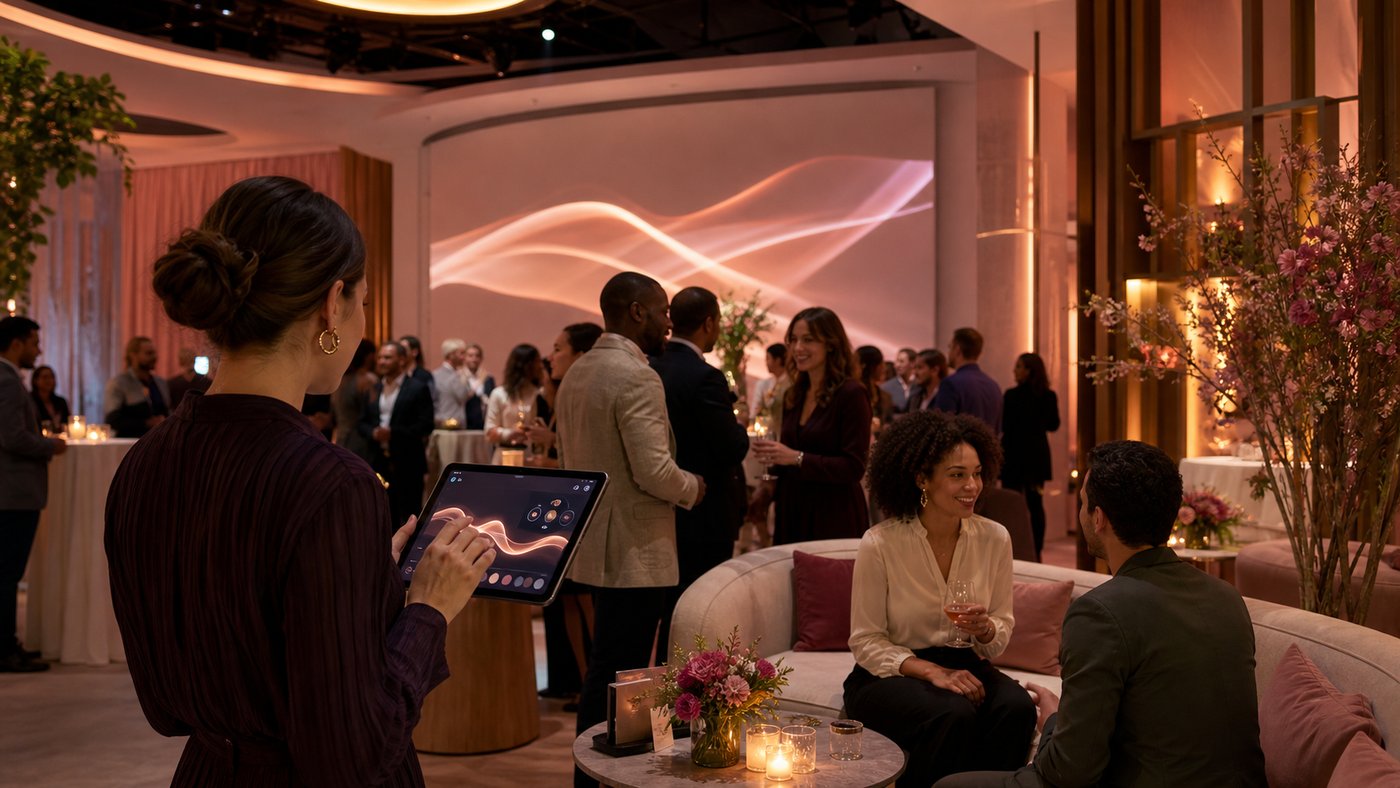
It means the event needs a point of view: a visual language that reinforces the message and naturally invites people to participate in telling the story.
3. Personalized, Interactive Experiences Are Now the Standard
The sit-and-listen era is over. Attendees want to shape their experience, not just witness it.
They love when events include:
- Choose-your-own breakout tracks
- Hands-on components
- Co-creation moments
- Short, punchy micro-sessions
- Cozy quiet zones for recharging
- Storytelling
- Opportunities to interact, vote, decide, or collaborate
You don't need a massive budget. You need flexibility. Modern event content should be modular enough to pivot in real time if the energy shifts.
4. AI + Voice Tech Are Transforming Event Flow
We've entered a new chapter of attendee navigation.
Examples you'll start seeing more of:
- AI-powered assistants ("Hey UO, what time is the keynote?")
- Voice-guided wayfinding
- Instant session summaries
- Personalized recommendations ("You might love these sessions…")
- Dynamic agendas that adjust based on preference
Printed schedules aren't disappearing, but intelligent interaction reduces friction, confusion, and overwhelm for both attendees and staff.
6. Hybrid + Emerging Tech Experiences Are Here to Stay
With today's network speeds, virtual and hybrid experiences are smoother than ever. That means:
- Reliable livestreaming
- Stronger AR/VR components
- Low-stress digital check-ins
- Richer mobile engagement
- Growth of the "digital attendee identity"
But remember: Technology is the tool, not the point.
The emotional arc is what lingers.
7. Emotional Connection Is the True Measure of Event Success
If attendees leave feeling:
- Inspired
- Seen
- Energized
- Connected
- Supported
- Excited to share
- Motivated to return
…your event worked.
The heart of event design hasn't changed: People come for how it makes them feel.
Your role is to create moments that invite transformation, connection, and meaning, with or without high-tech bells and whistles.

🛠 Tools We Use & Love
Here are some tools that support modern event design (no overwhelm, no jargon):
- Canva Whiteboards: Great for visual planning + storyboarding an event arc
- Notion: A flexible hub for agendas, run-of-show, guest experience mapping
- Airtable: Wonderful for managing vendors, timelines, content assets
- Hopin / Airmeet / Zoom Events: Easy hybrid integration
- Otter.ai: Automated notes, summaries, and transcripts
- Miro: For collaborative design, especially with remote teams
(Some of the tools mentioned on our website may include affiliate links, which simply means we may earn a small commission, always at no extra cost to you. We only recommend things we truly love.)
💡 How AI Can Support Your Event Design Process?
You don't need to be tech-savvy. You just need to know what to ask for.
Here are simple ways AI can help:
1. Create sample agendas
Try prompting:
"Create a 3-hour event agenda with two breakout options, one hands-on activity, and one closing moment that builds connection."
2. Generate sensory experience ideas
Try:
"Suggest five low-budget sensory elements for a fundraising gala that create a warm, intimate atmosphere."
3. Summarize stakeholder conversations
Copy-paste notes and ask:
"Create a clear decision summary with action steps and deadlines."
4. Draft scripts + intros
"Write a warm, upbeat 30-second welcome for a leadership retreat. Tone: calm, confident, inspiring."
5. Personalize attendee journeys
You can ask AI to draft sample personas and recommend ideal breakout paths.
AI won't replace event designers. But it absolutely makes the process calmer, faster, and more creative.
If you would like company while you put this into practice, the UnOffice Community is free to join, with the guides, Notion templates, and AI walkthroughs I build for exactly this kind of work.
Join Us in the Community5. Influencers Are Now Central to Event Strategy (Yes, Even Internally)
Influencers aren't just social media figures anymore. They've become:
- Micro-MCs
- Breakout leaders
- Content amplifiers
- Culture shapers
- Tech explainers
- Fundraising engines
- Community builders
And inside companies? Peer influencers have enormous trust and visibility.
Ignoring them means missing out on one of the most effective reach multipliers available today.
✨ Quick Strategy Recap: The New Rules of Event Design
1. Replace "wow" with "why." Focus on clarity, intentional pacing, and experiences that respect attention, not flashy distractions.
2. Design events like an "event sommelier." Modern attendees want curated, social-friendly moments worth capturing and sharing.
3. Build interactive, modular experiences. Offer choices: breakouts, micro-sessions, hands-on elements, and spaces for rest or collaboration.
4. Use AI to remove friction. Try smart agendas, voice navigation, instant summaries, and AI-powered recommendations to create smoother attendee flow.
5. Partner with influencers intentionally. Both external and internal influencers amplify messages, set culture, and shape engagement.
6. Embrace hybrid as a design layer, not an afterthought. Use tech to support livestreaming, AR/VR elements, and memorable virtual attendee experiences.
7. Build emotional connection above everything else. People remember how an event made them feel: inspired, connected, energized, or supported.
Originally published February 2019. Last updated August 2026.
Before you go…
💬 Which trend surprised you most?
Are you using AI in your event planning yet? Or what's one change you want to make for your next event?
Your insights help us shape future posts, and they help other planners grow, too.